Gallery
Screenshots from the game, grouped by the dev diary that first showed them. Select an image to see it full size.
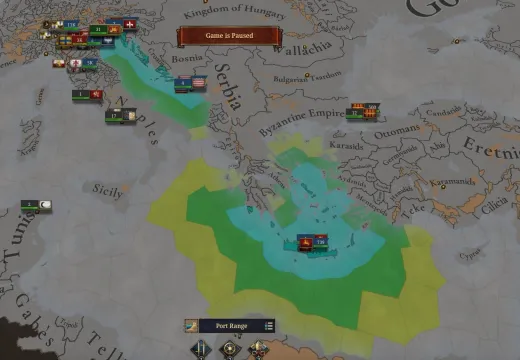
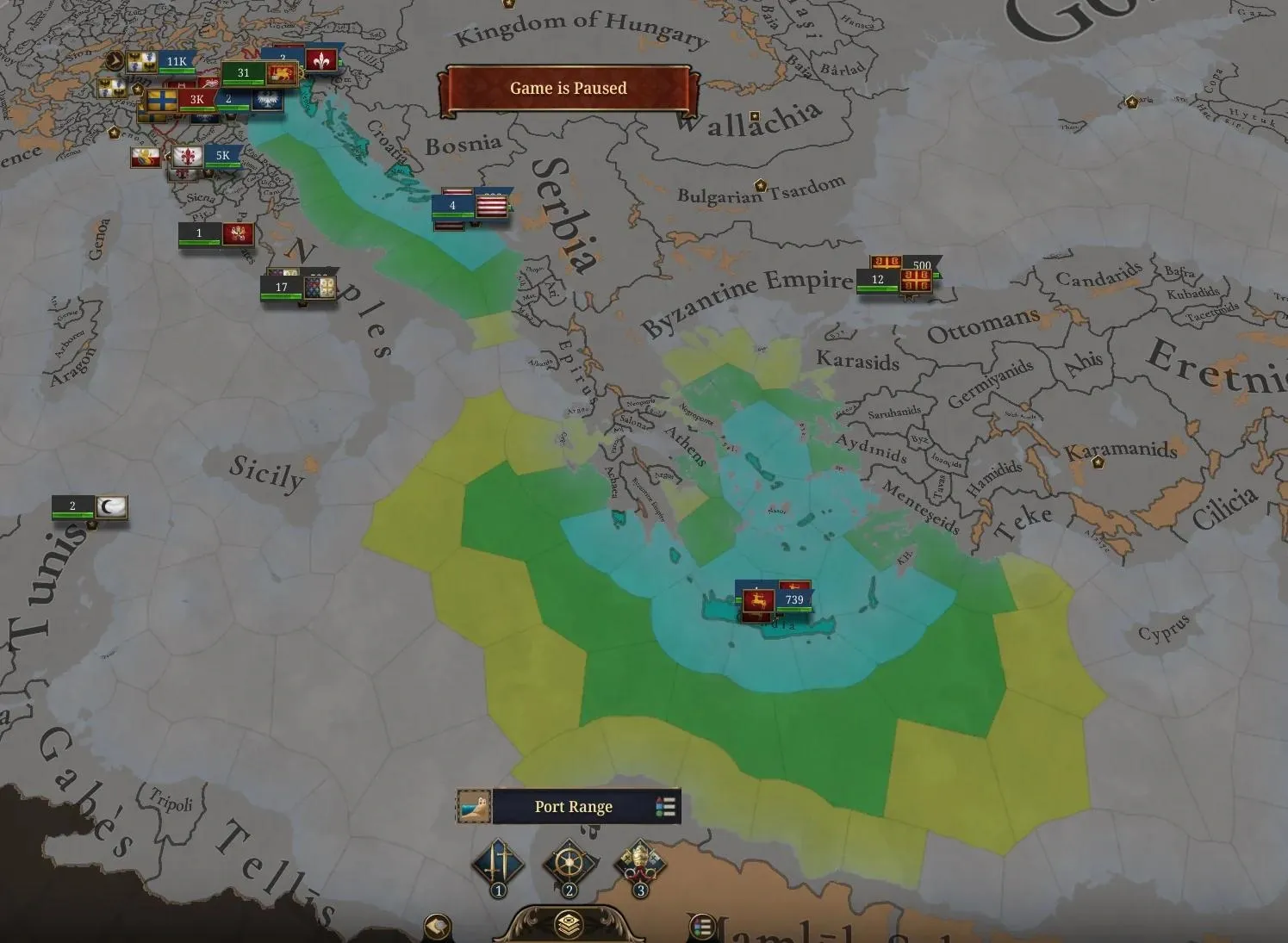
The Port Range map mode: the waters Venice can patrol from its bases, from the Adriatic to Crete.
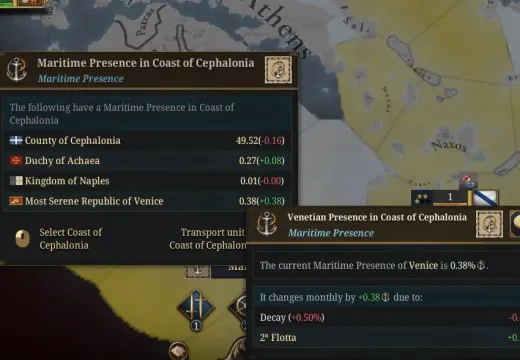
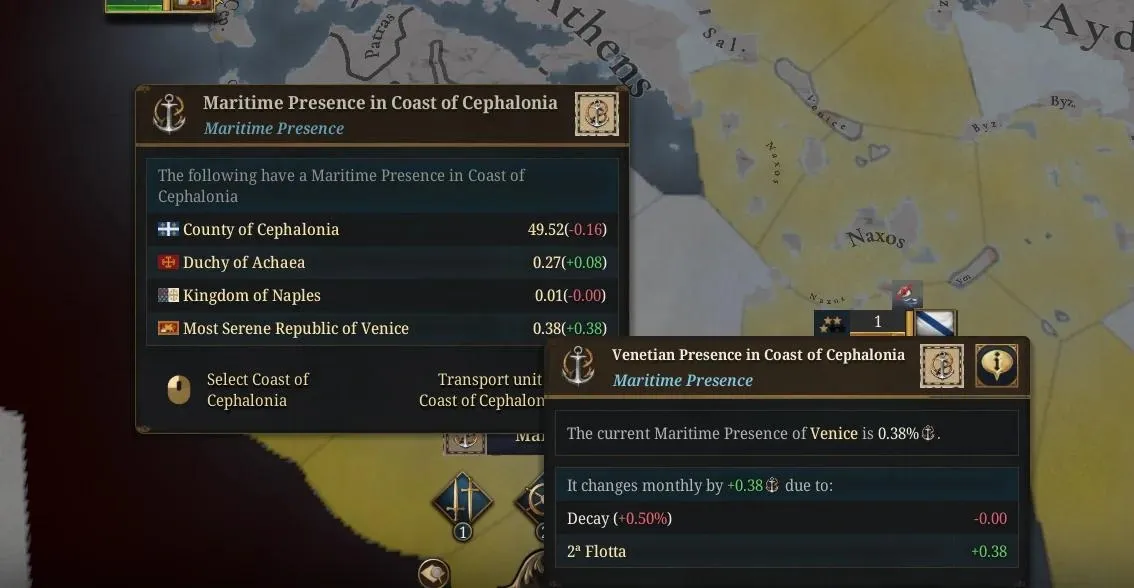
In the base game a fleet builds maritime presence wherever it sails, here a Venetian fleet off Cephalonia.
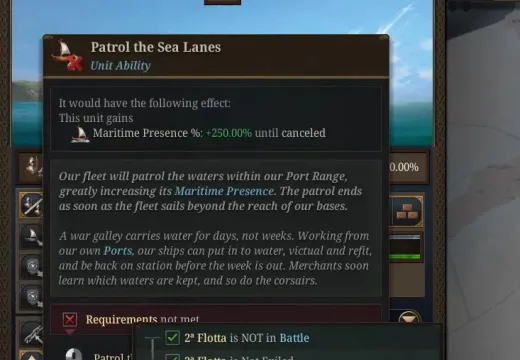
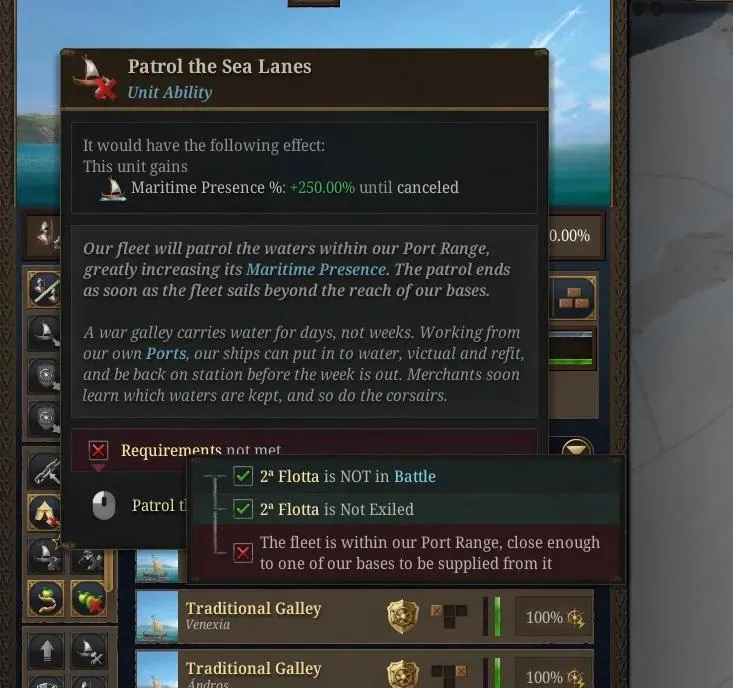
Patrol the Sea Lanes: a new fleet stance that raises maritime presence by 250%, but only within range of our own ports.
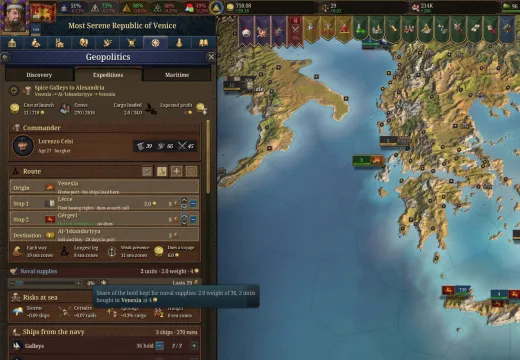
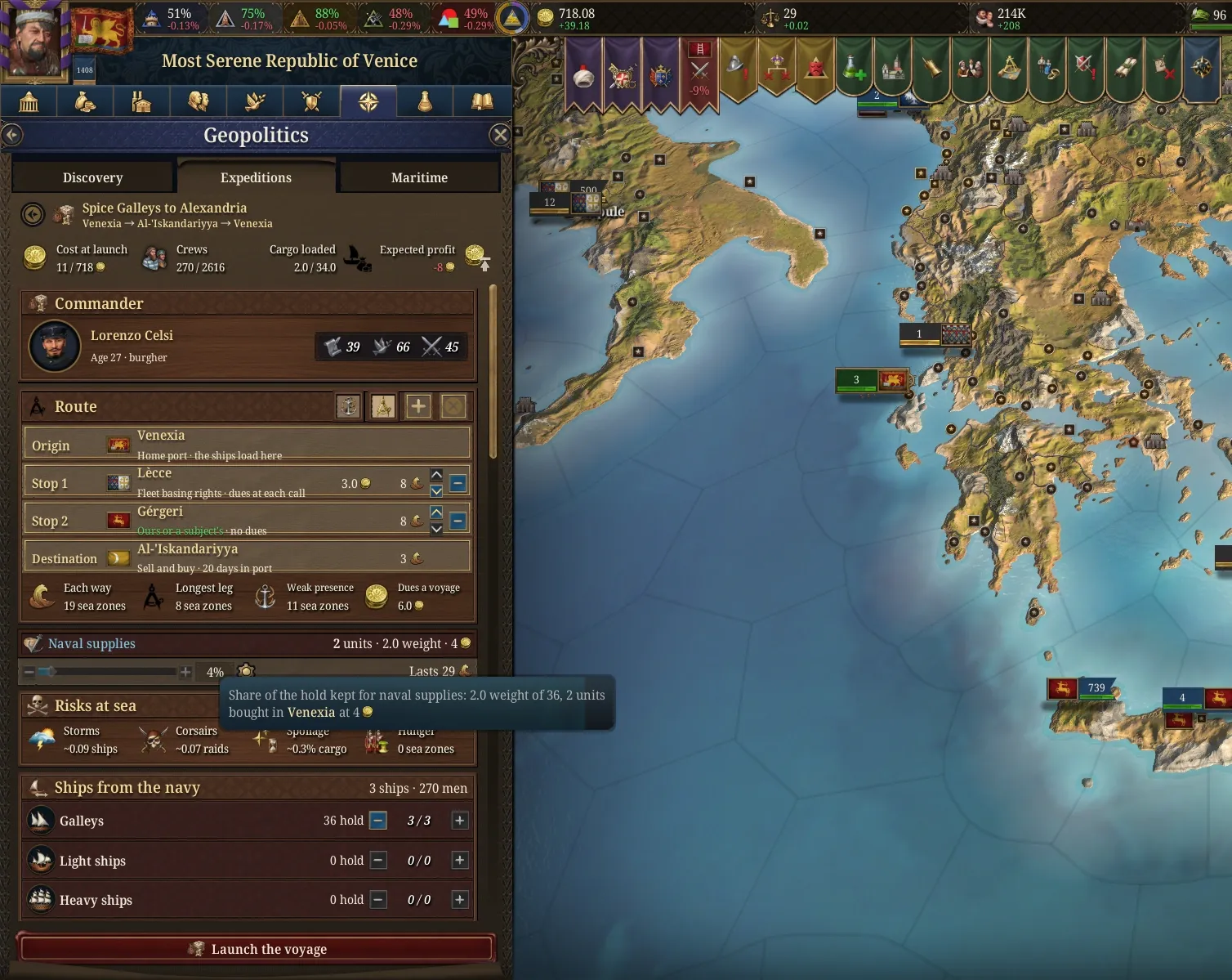
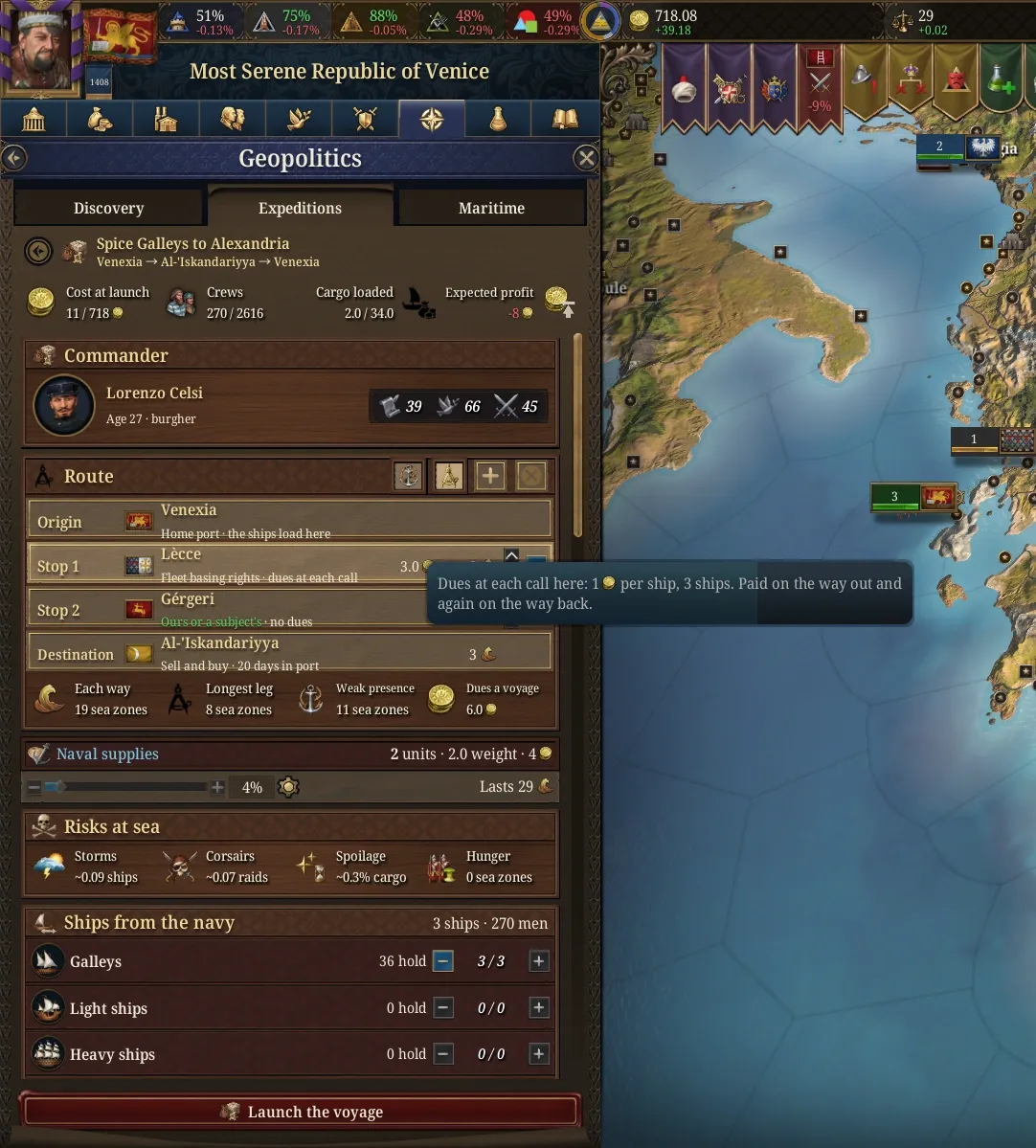
Spice Galleys to Alexandria: a commander, a route with its stops, naval supplies, the risks at sea and the ships drawn from the navy.
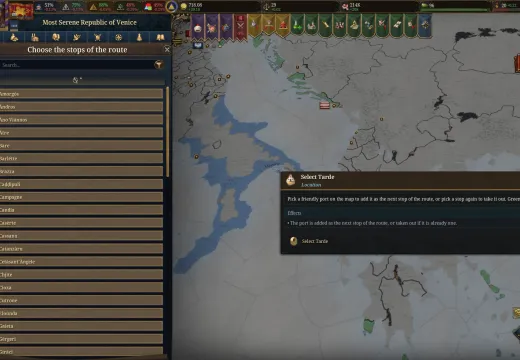
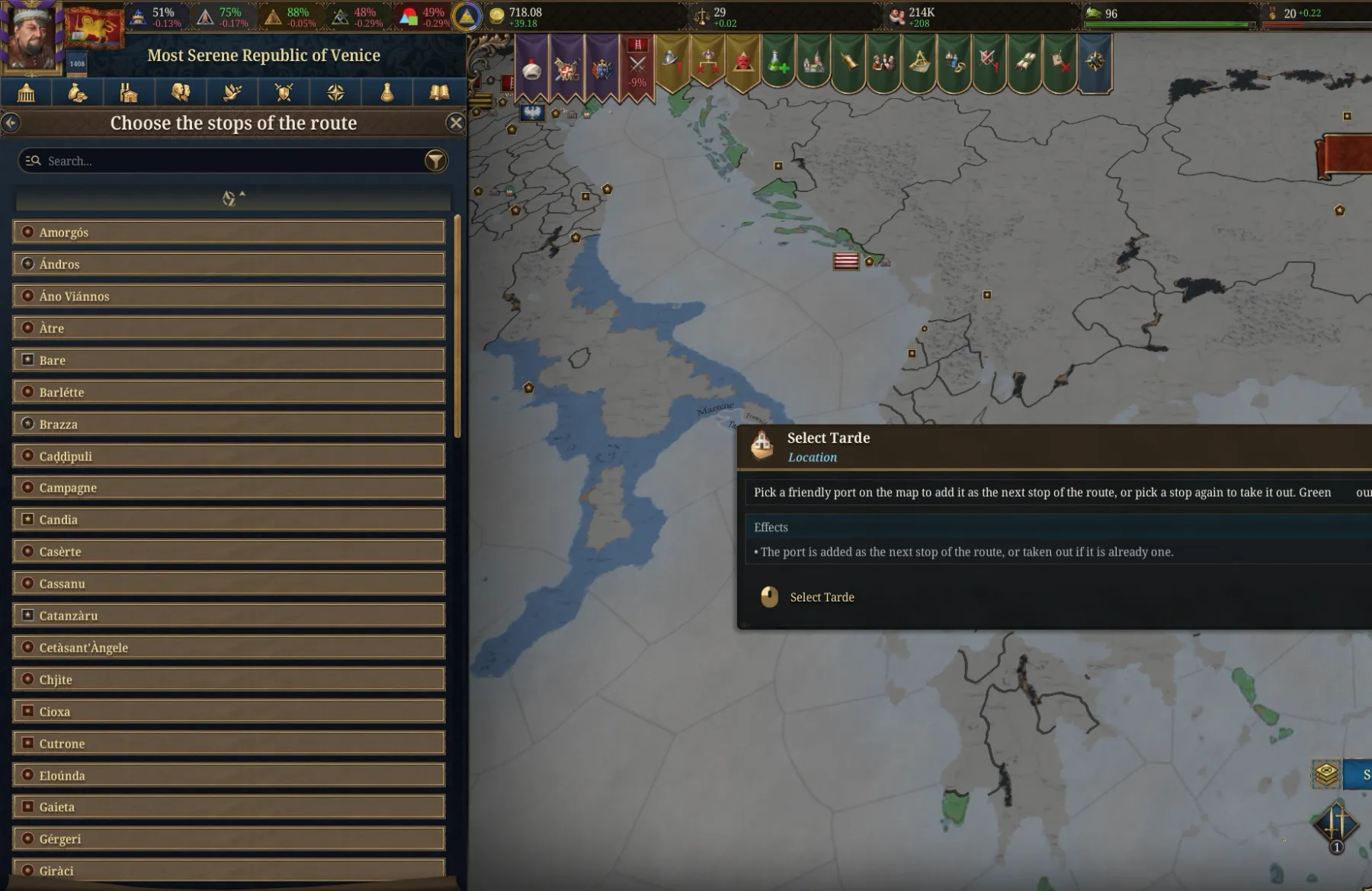
Choosing the stops: any friendly port on the map can be added to the route.
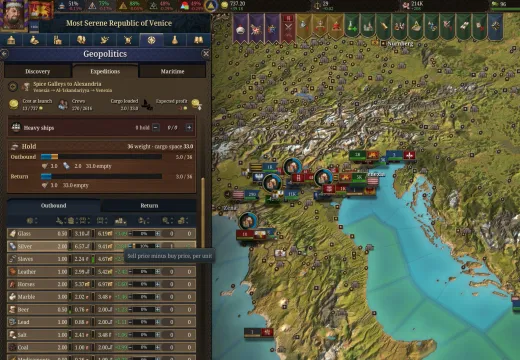
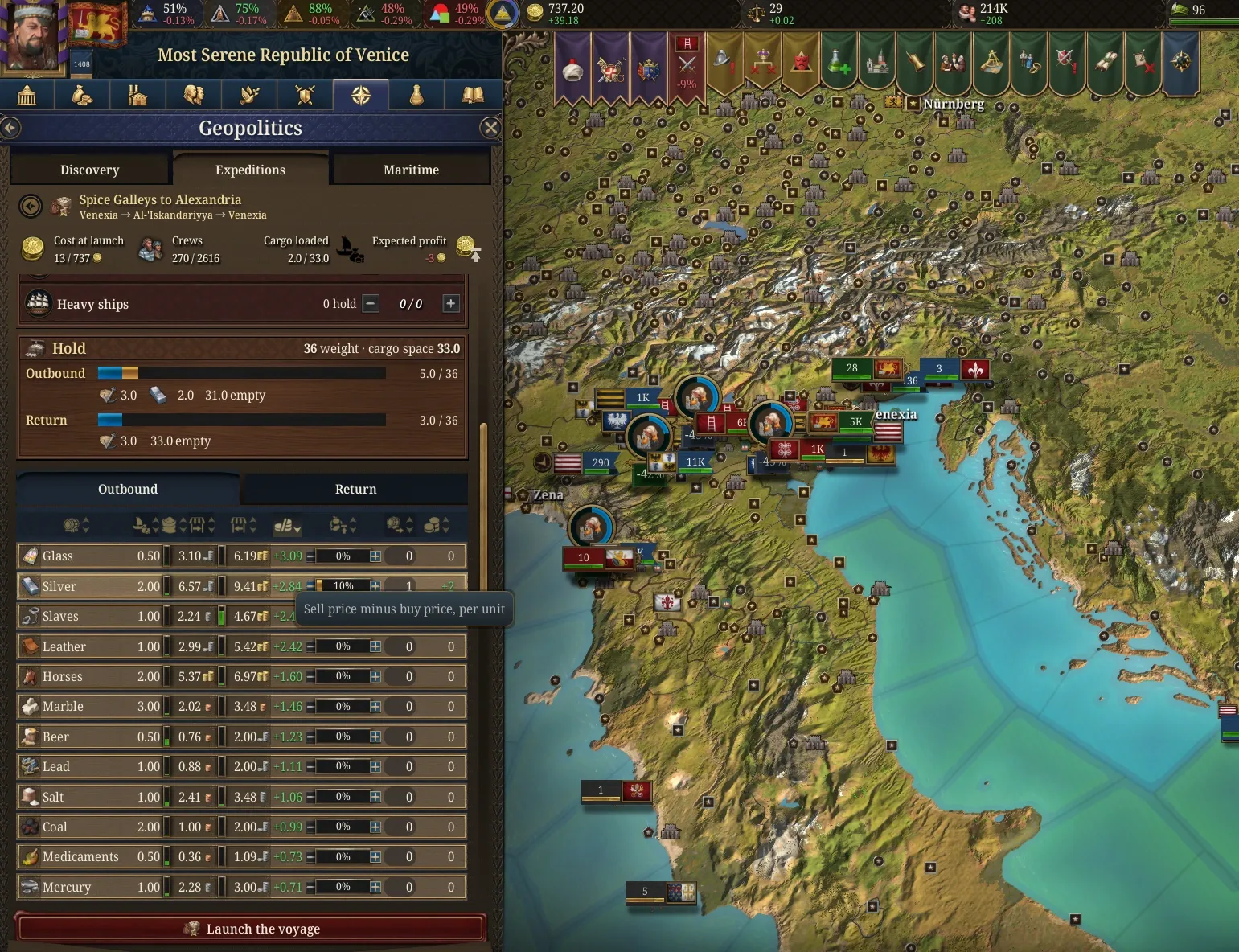
The hold: cargo for the voyage out and back, chosen by the margin between buying and selling price.
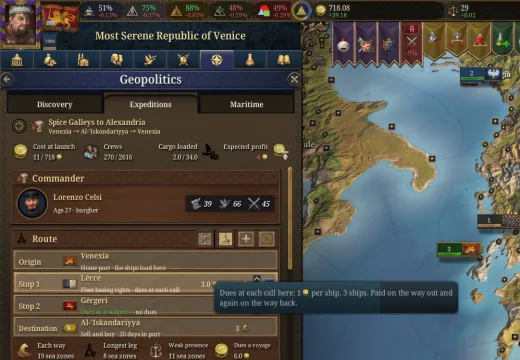
Every stop on the route charges dues per ship, on the way out and again on the way back.
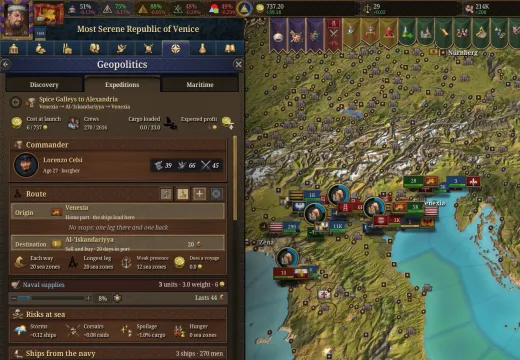
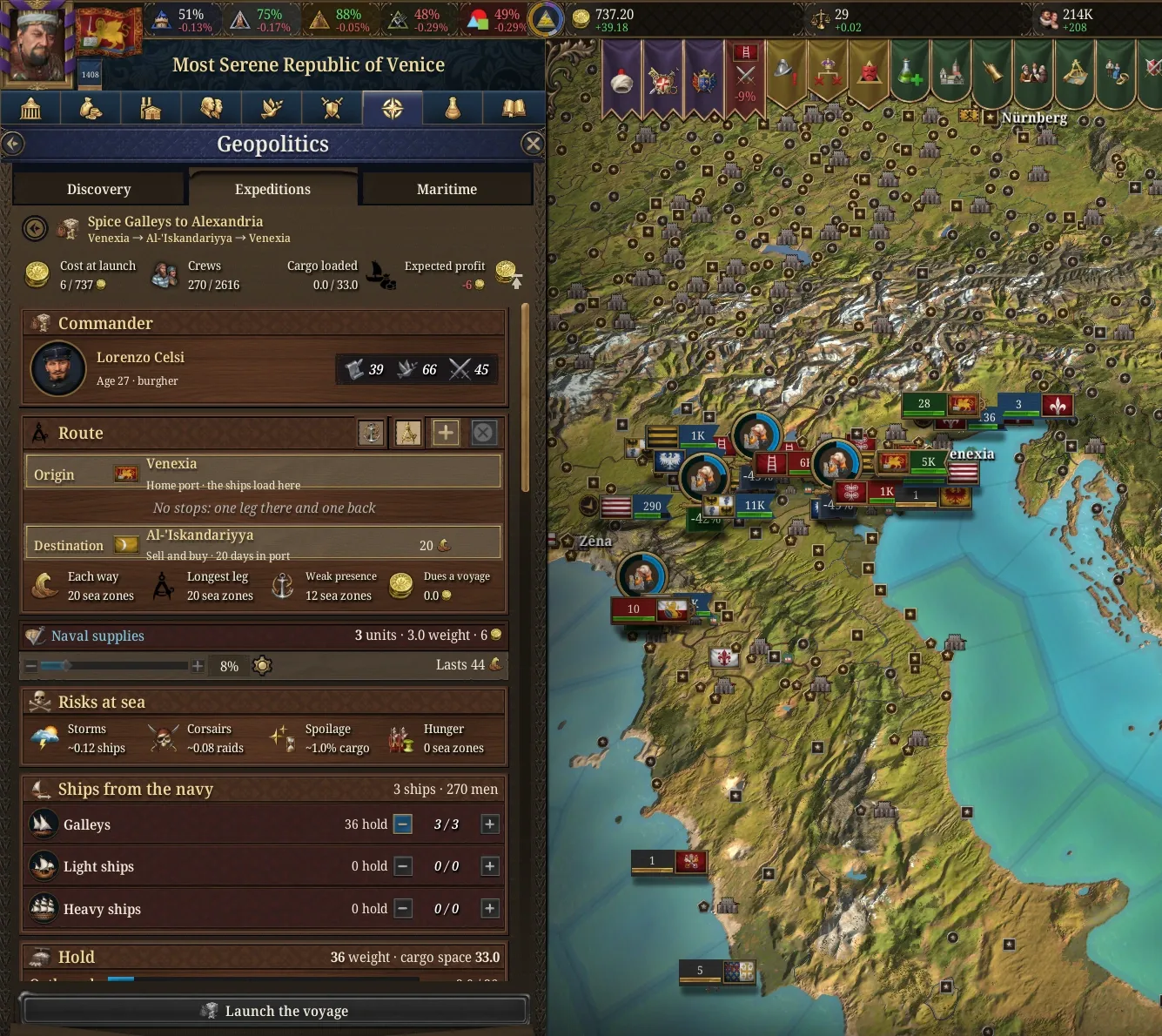
The same voyage with no stops: one leg there and one back, 20 sea zones each way.
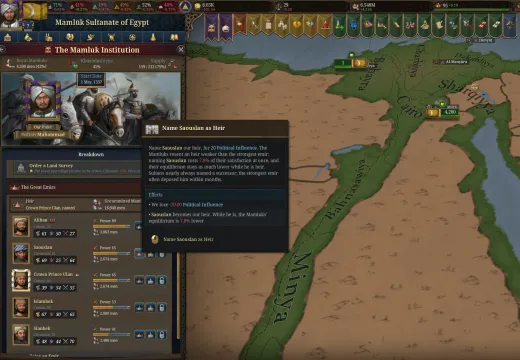
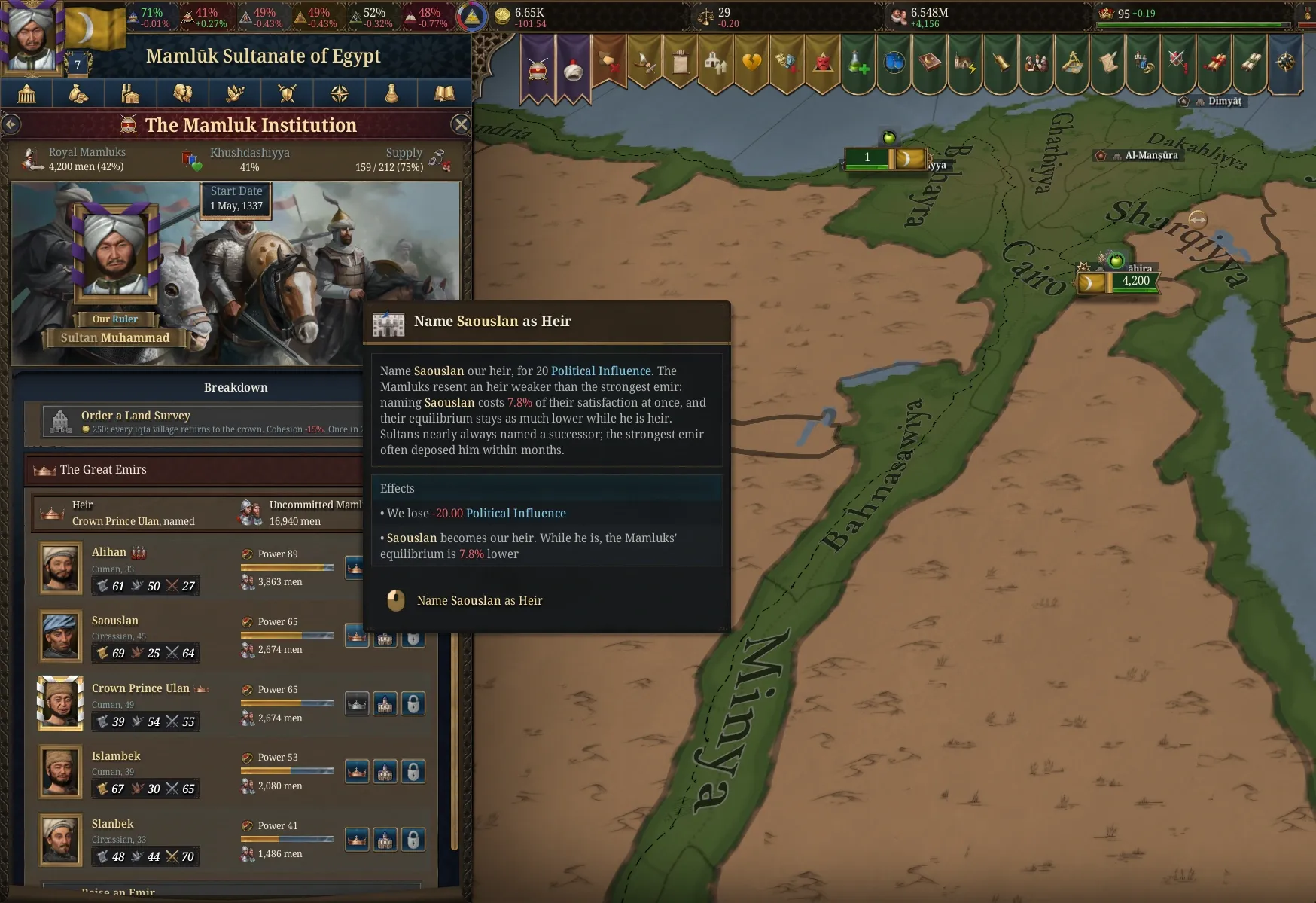
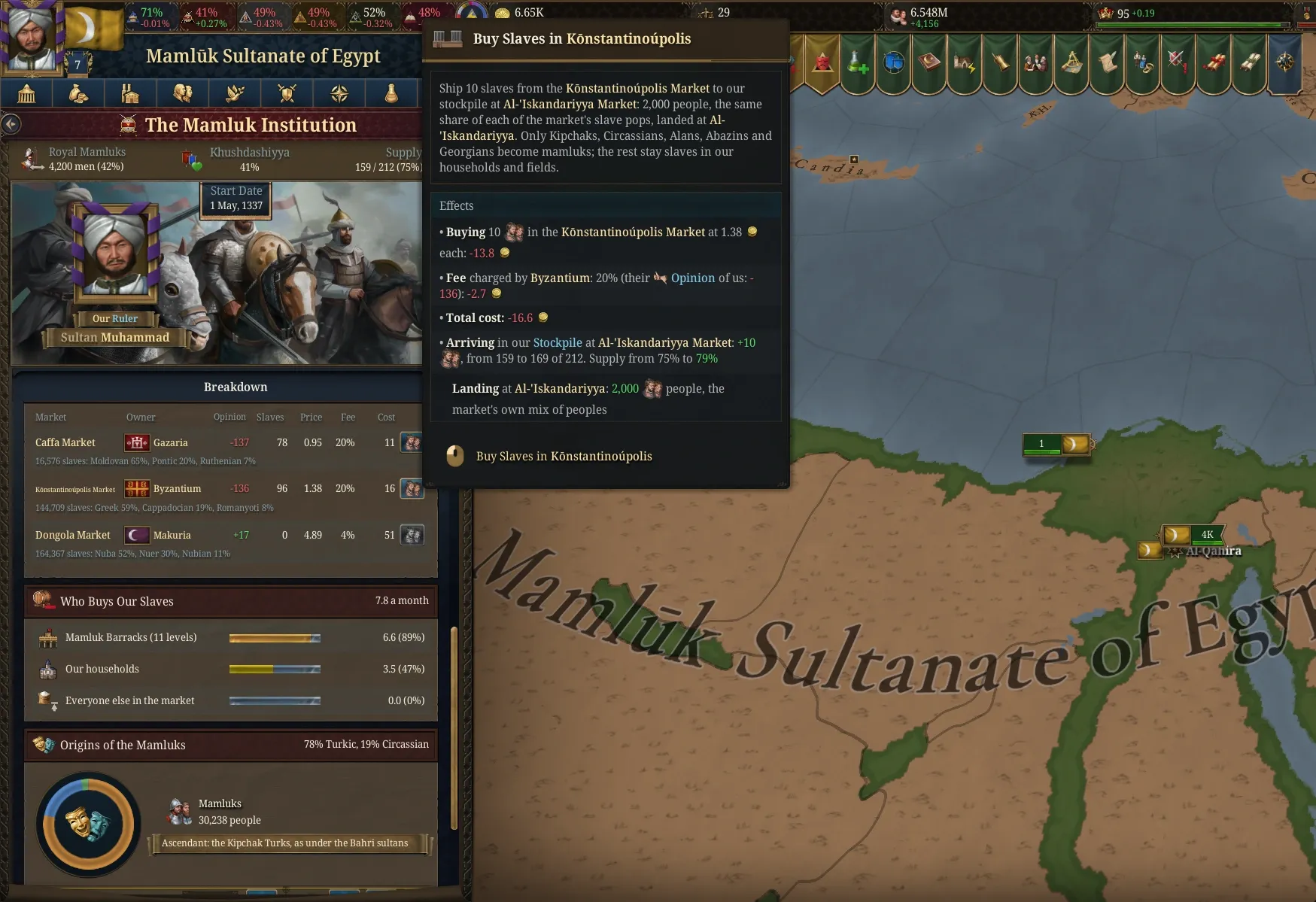
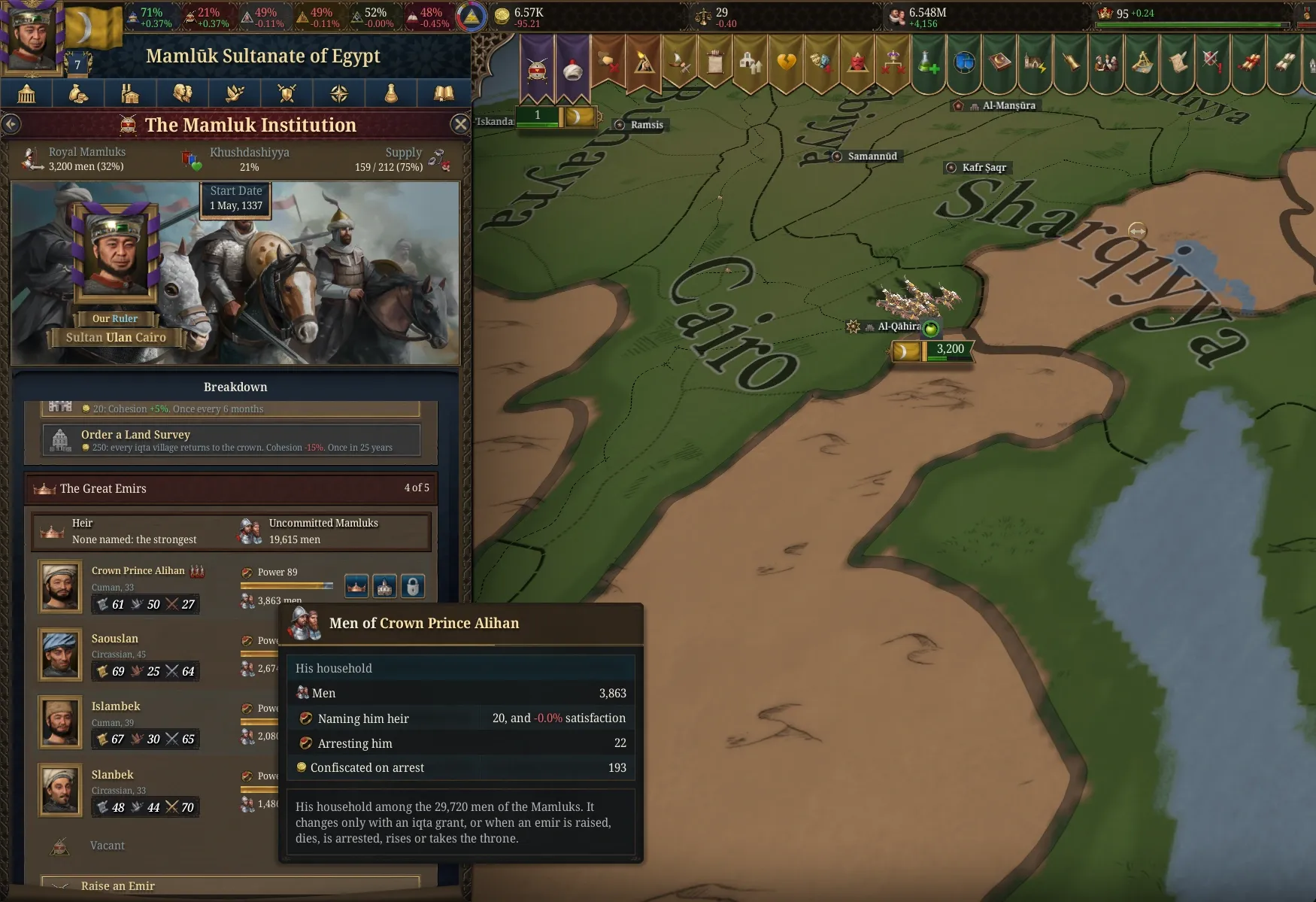
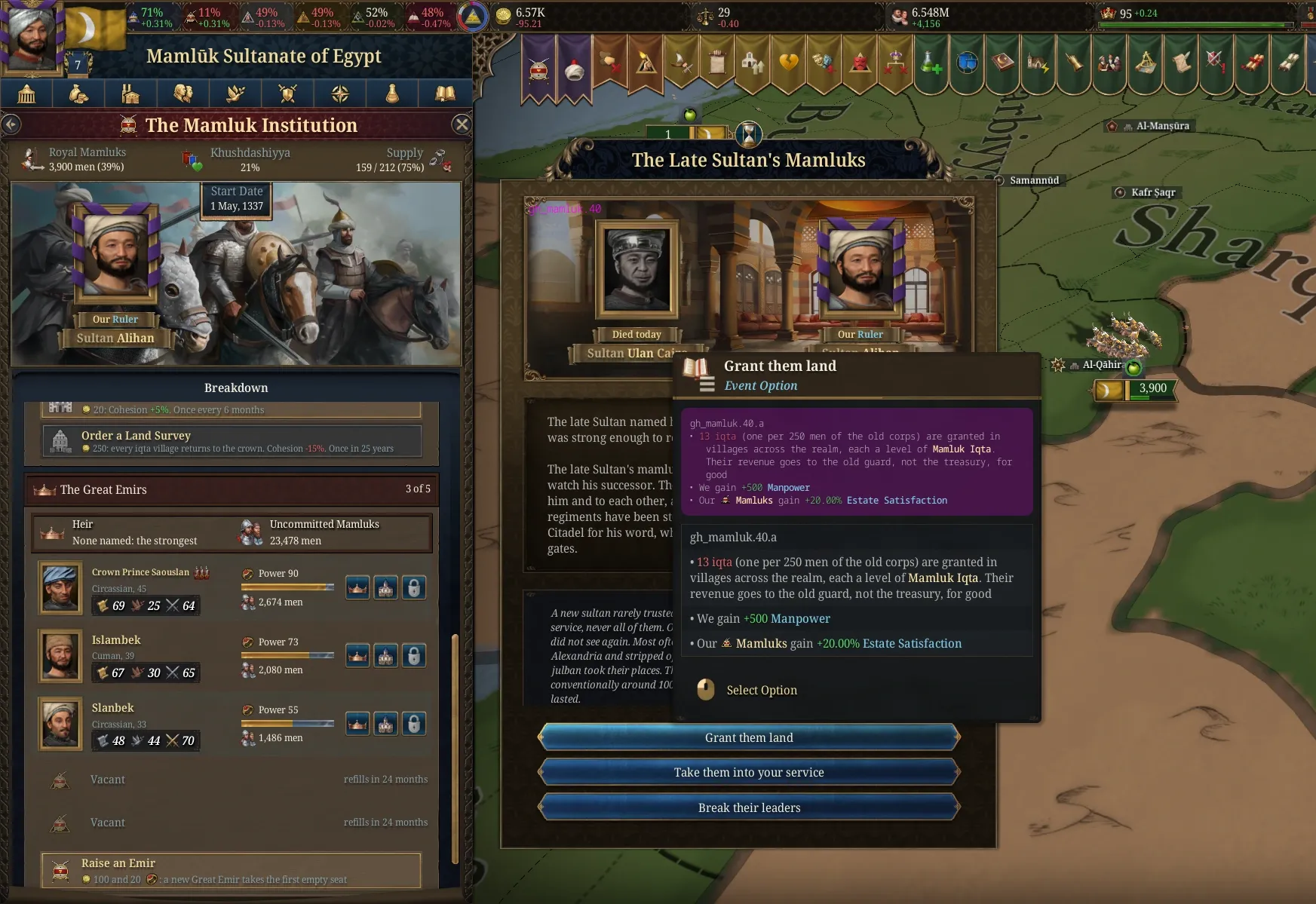
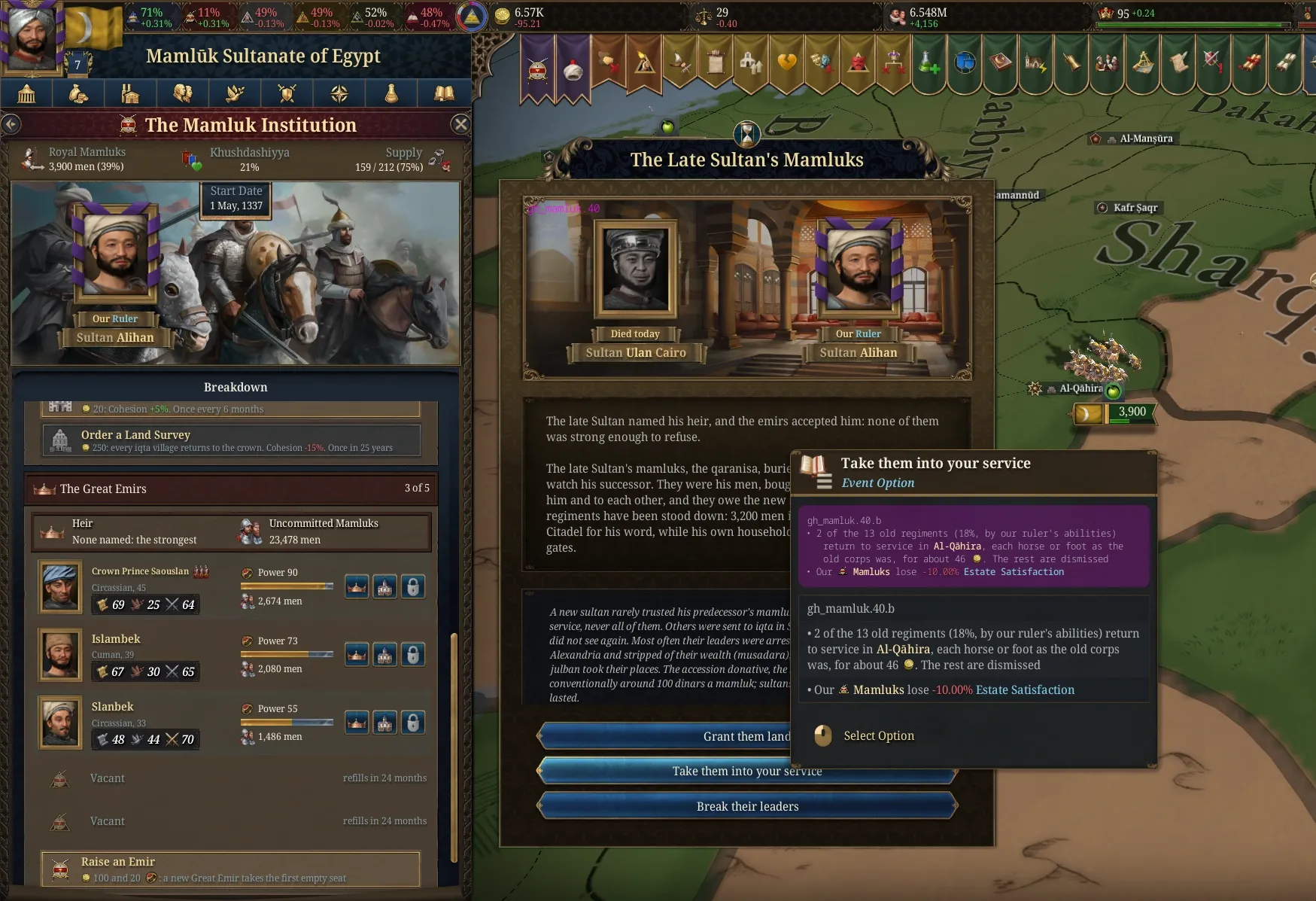
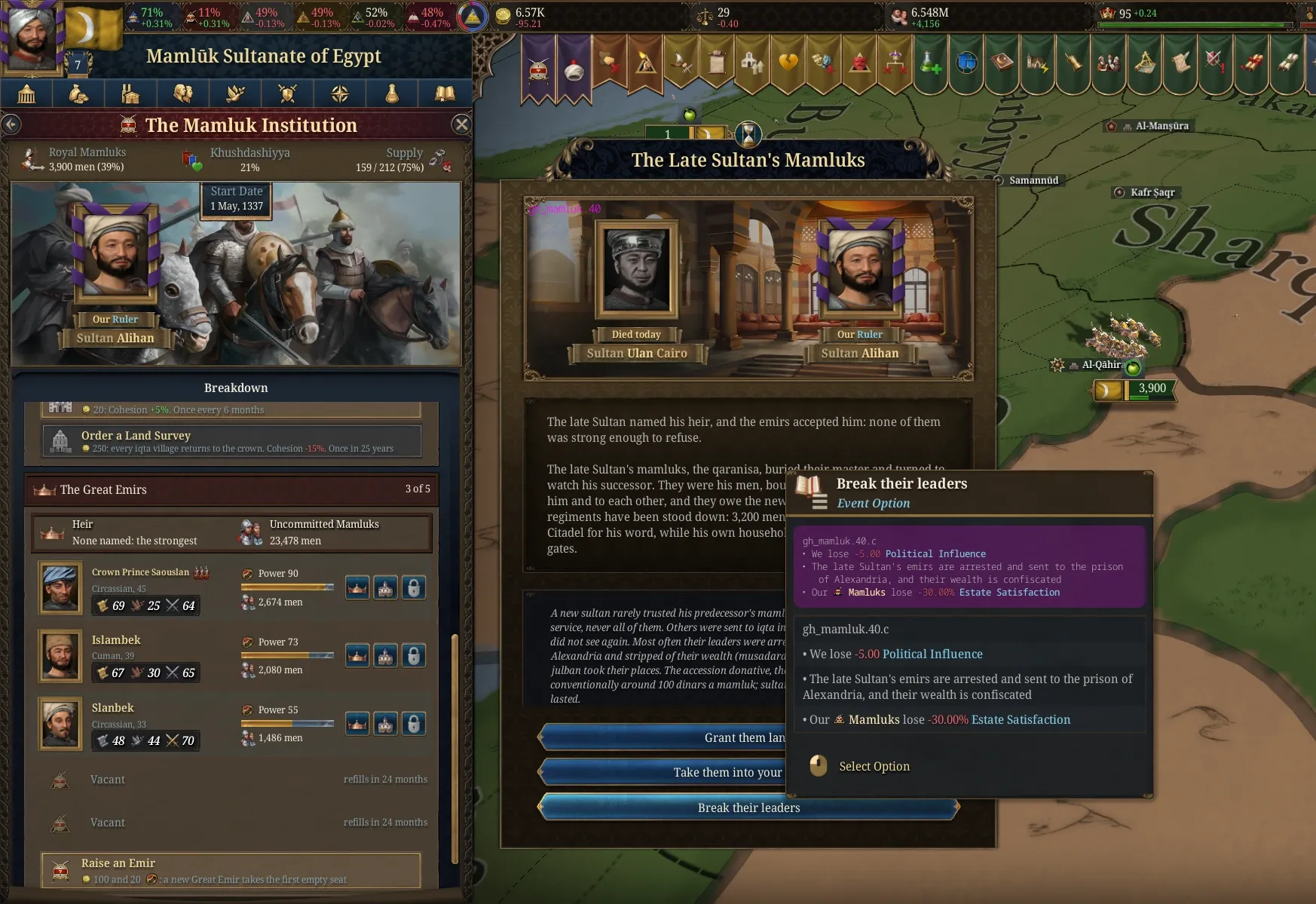
A new succession mechanic forces the player to choose between Mamluk candidates with real political power and backing.
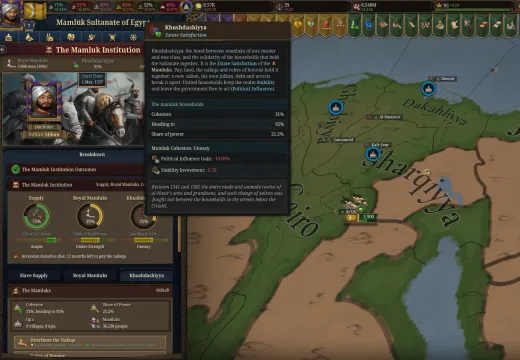
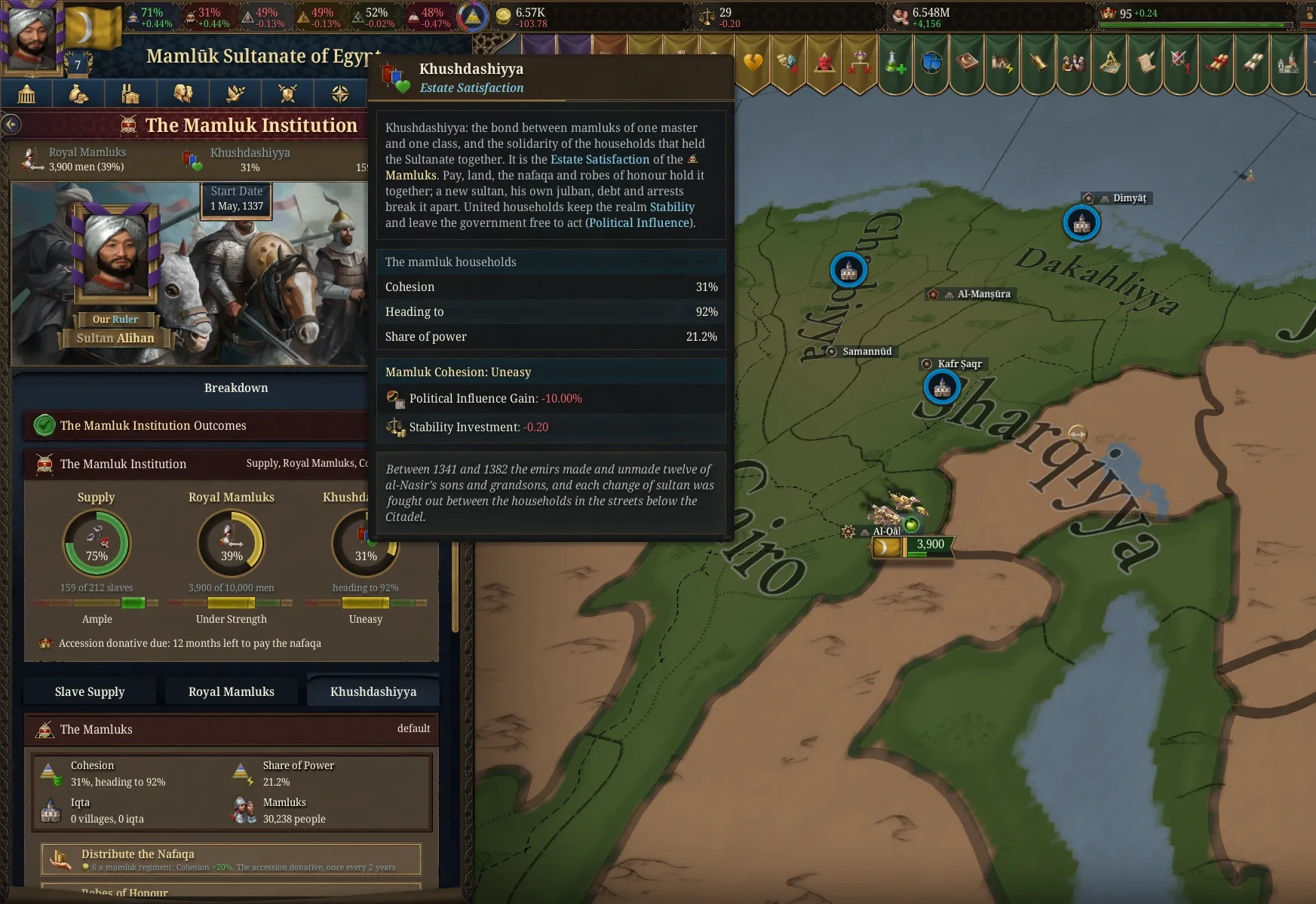
The three bars: Supply, Royal Mamluks and Khushdashiyya. Khushdashiyya, the bond between the households, is the mamluk estate's satisfaction.
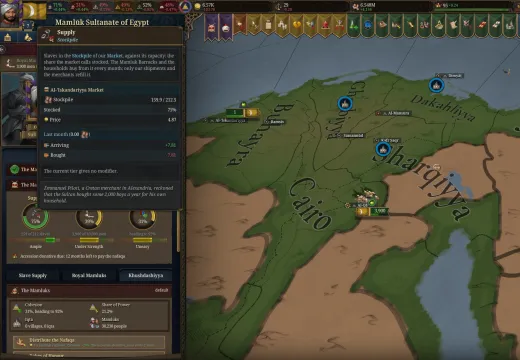
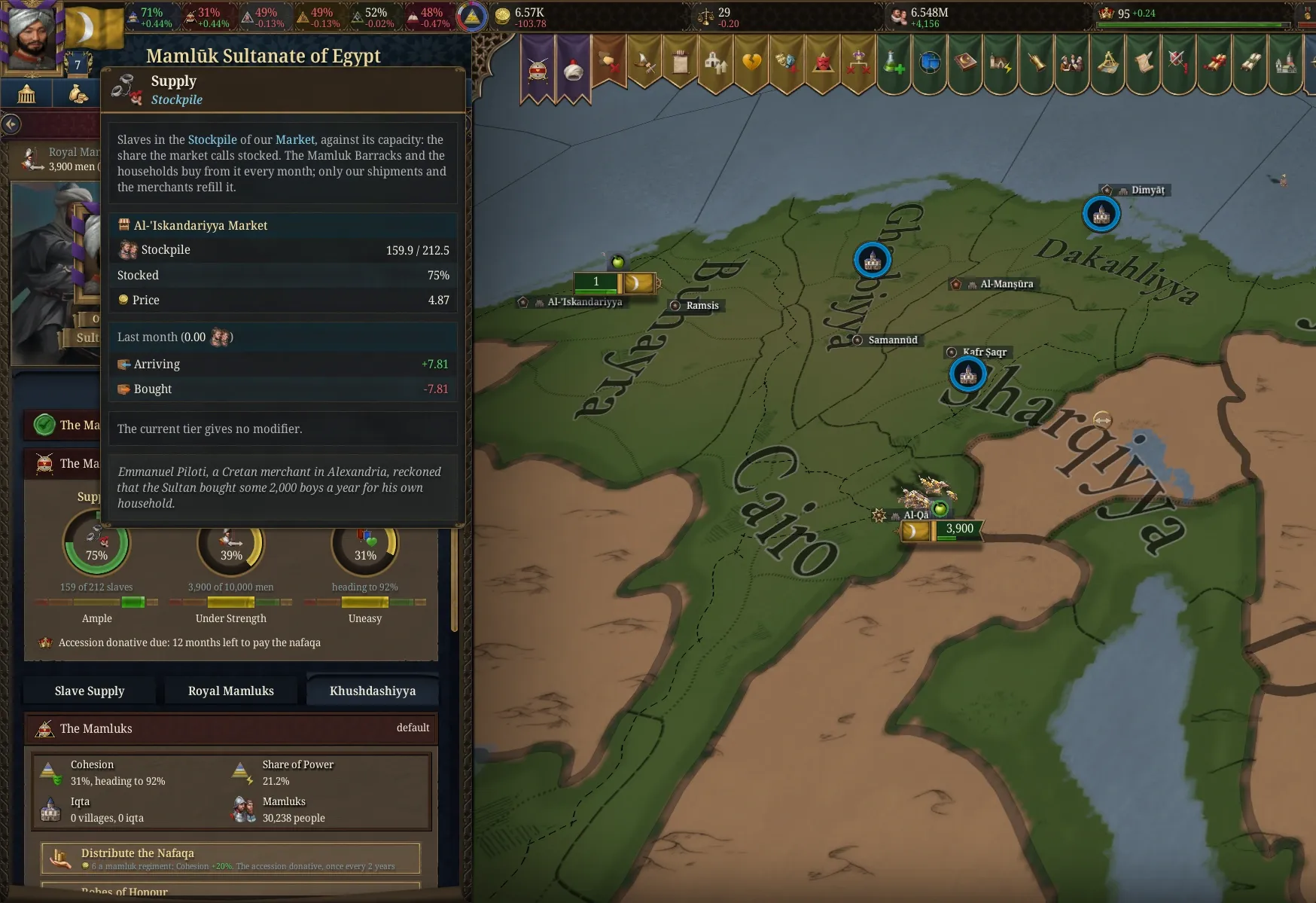
Supply: slaves in the stockpile of Al-Iskandariyya against its capacity. The barracks and the households buy from it every month.
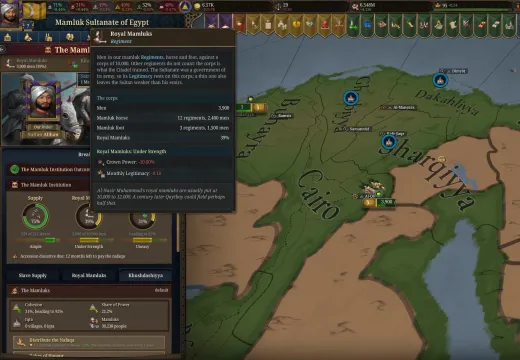
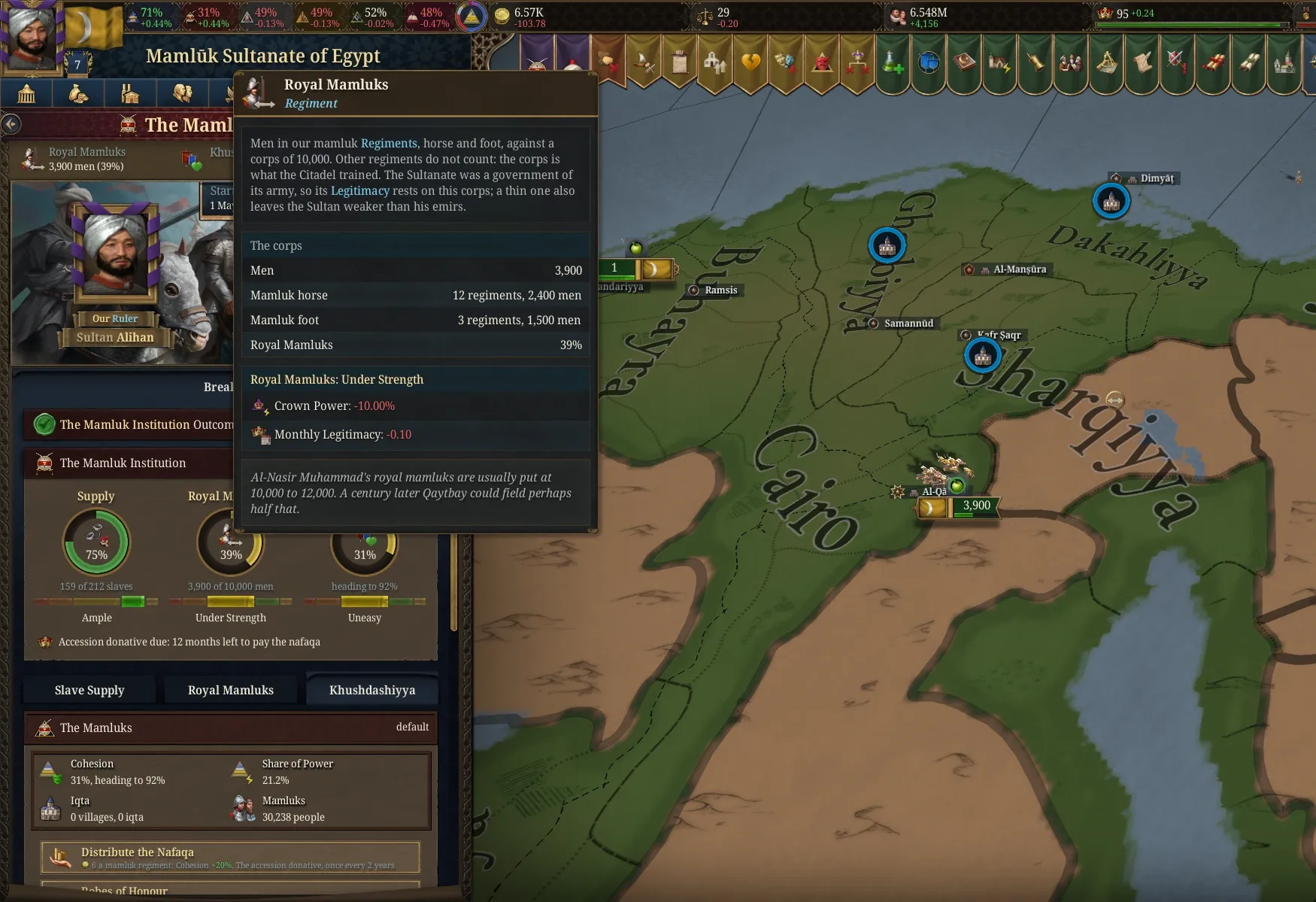
Royal Mamluks: the Sultan's own regiments against a corps of 10,000. His legitimacy rests on it.
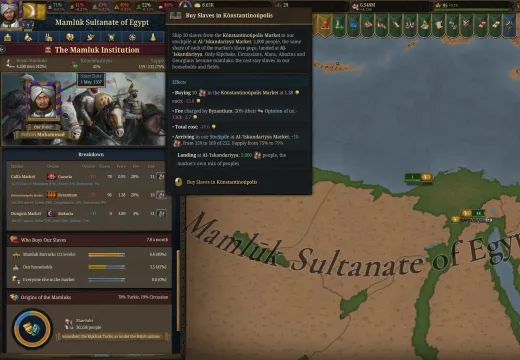
The Sultan's buyers work the markets of Caffa, Constantinople and Dongola. Each shipment lands as people at Al-Iskandariyya, and the market's owner takes a fee.
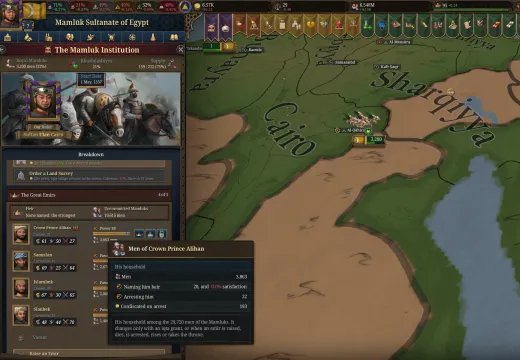
Each Great Emir has his own household of mamluks. Naming him heir or arresting him has a price, and his men come with him to the throne.

A new sultan must decide the fate of the late sultan's mamluks. Granting them land creates iqta, whose revenue goes to the old guard, not the treasury.
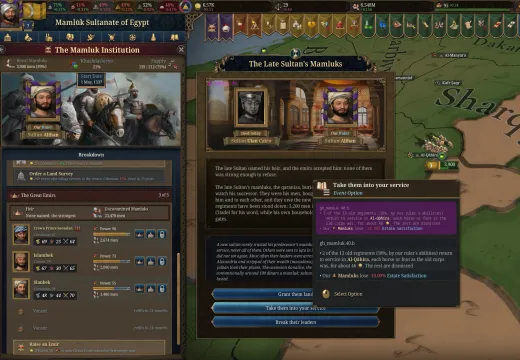
Or take some of them into his service: his abilities decide how many of the old regiments return. The rest are dismissed.

Or break their leaders: the late sultan's emirs are arrested and their wealth confiscated, at a cost in political influence and the estate's satisfaction.
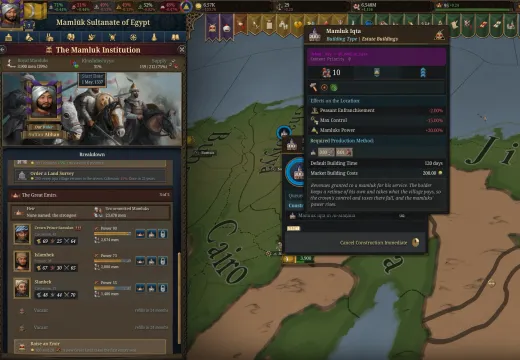
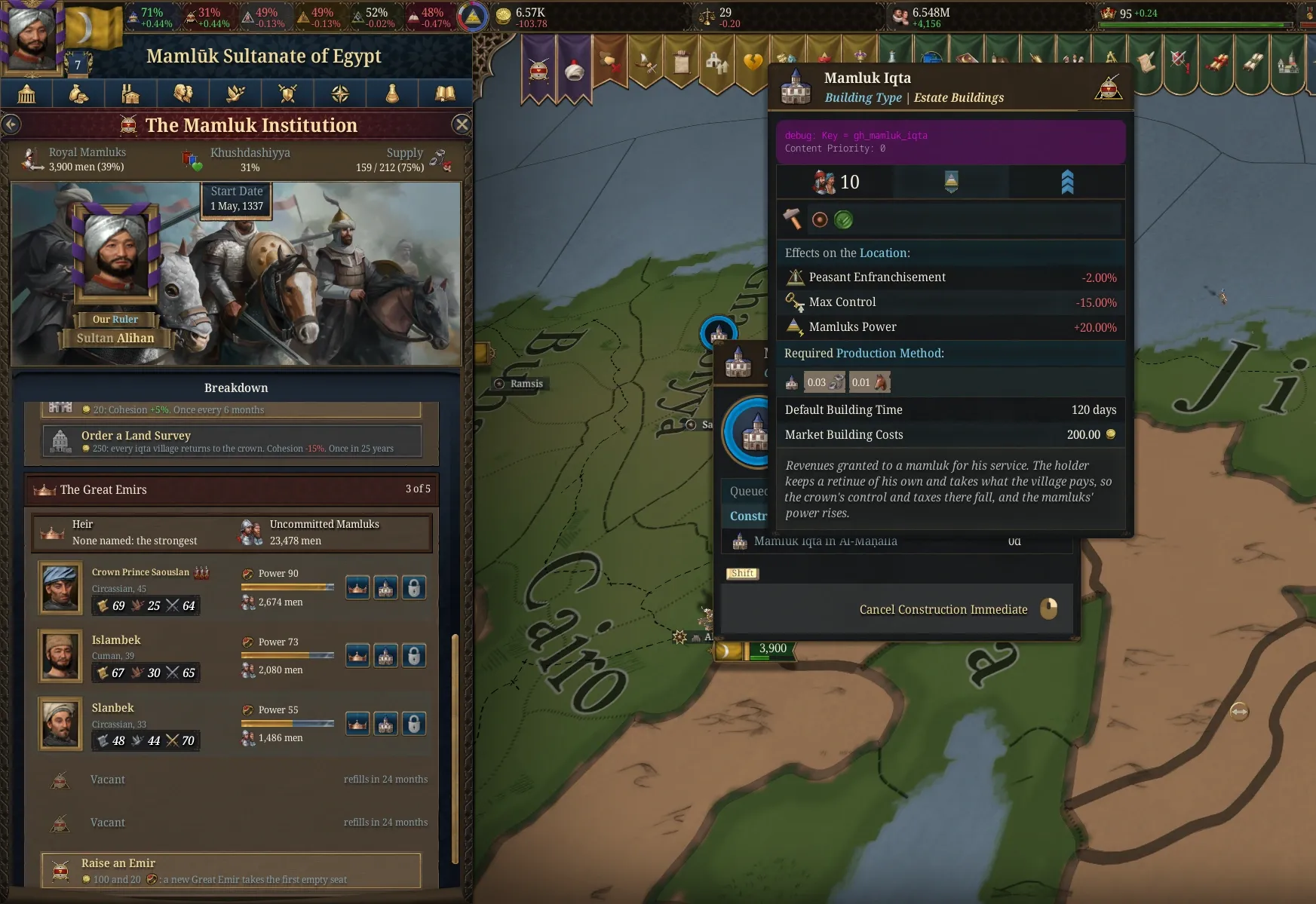
The Mamluk Iqta: a village's revenue granted for service. The crown's control and taxes there fall, and the mamluks' power rises.
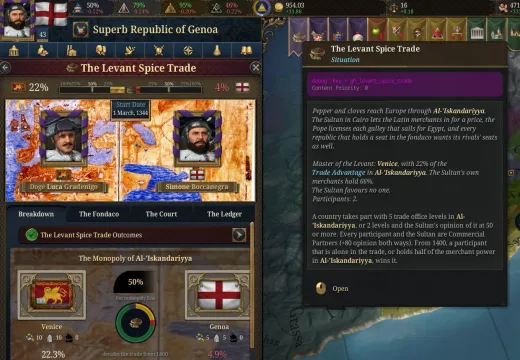
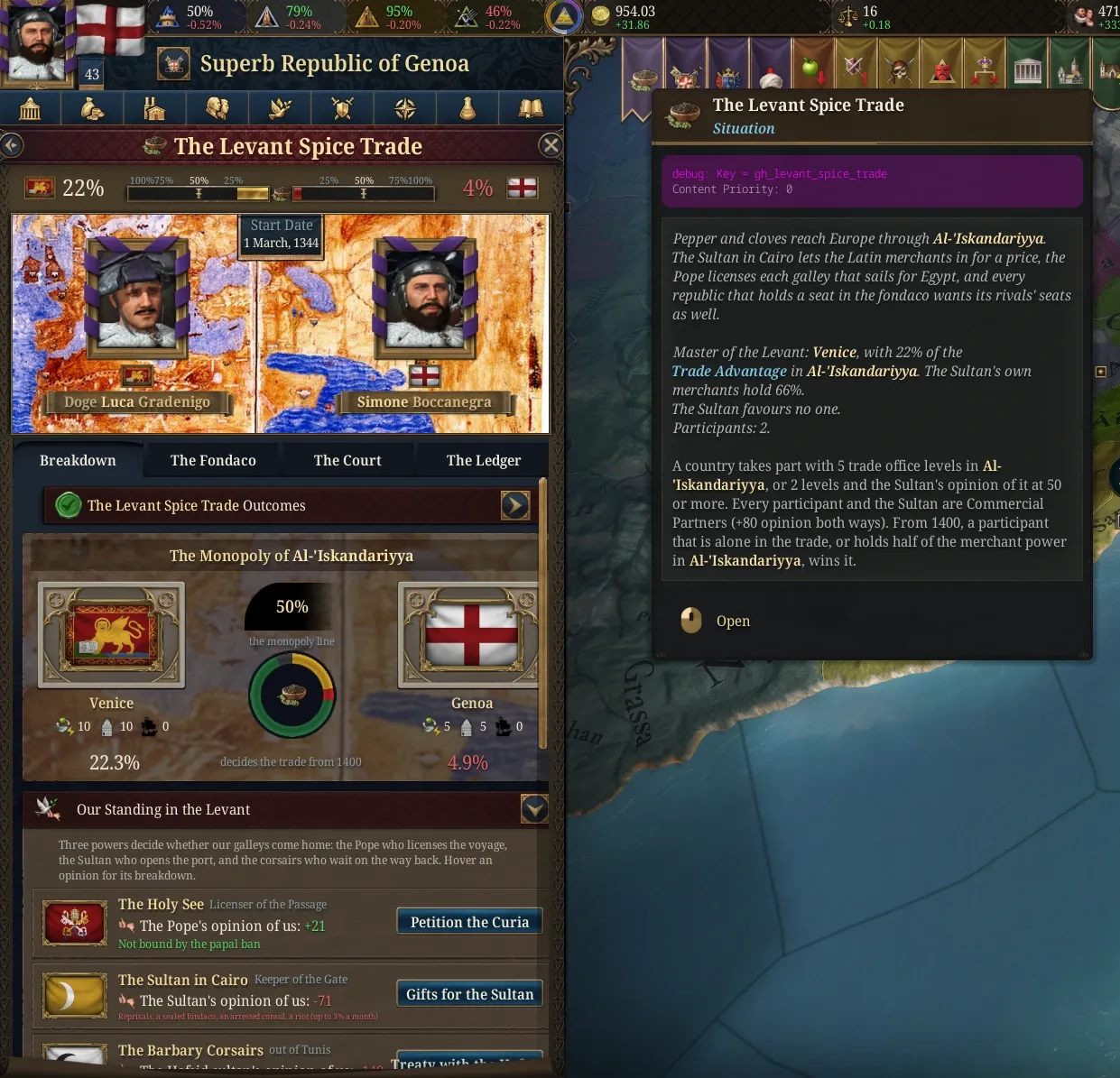
This situation alongside other changes help to model the spice trade (for the spice must flow!)
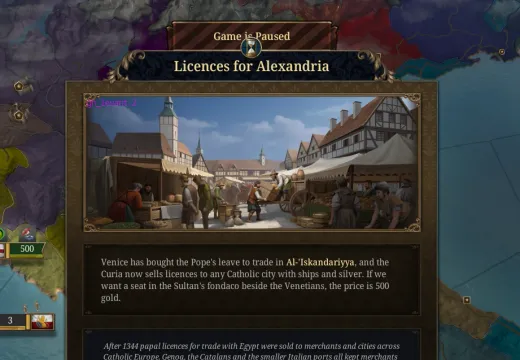
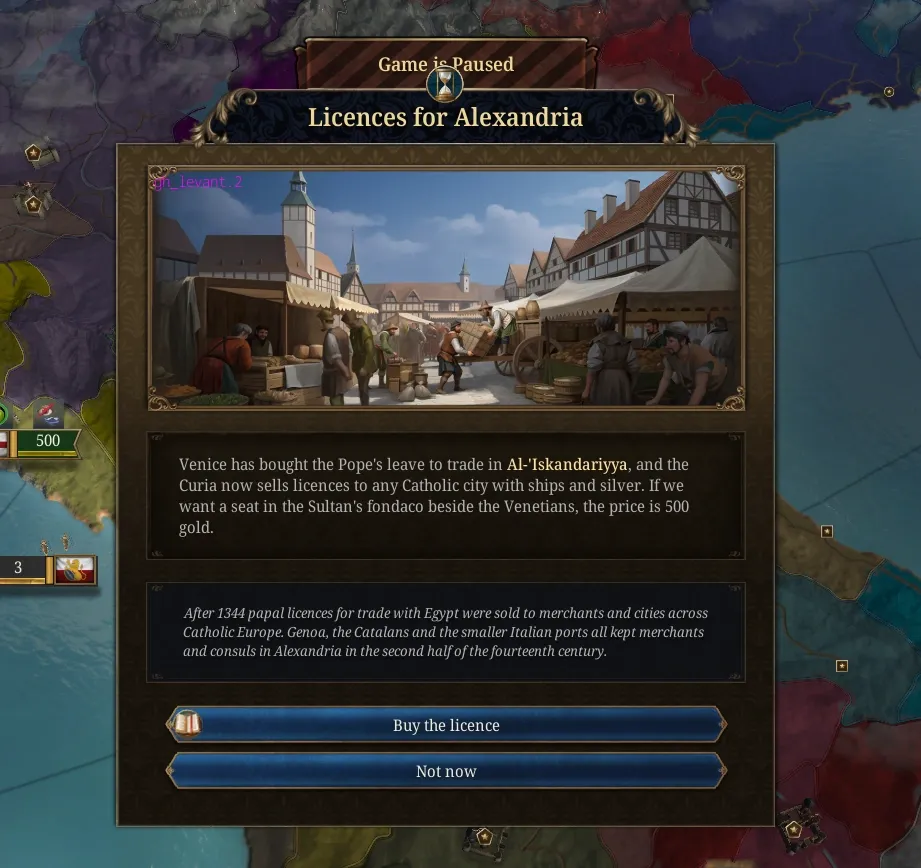
After 1344 the Curia sells licences for trade with Egypt. A seat in the fondaco beside the Venetians costs 500 gold.
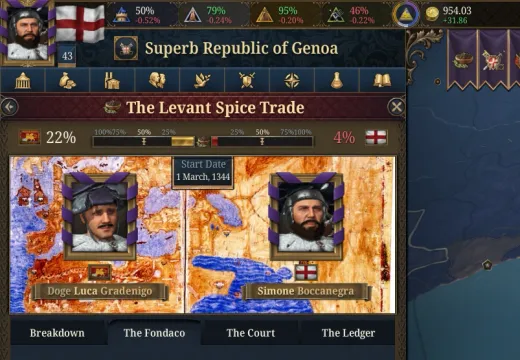
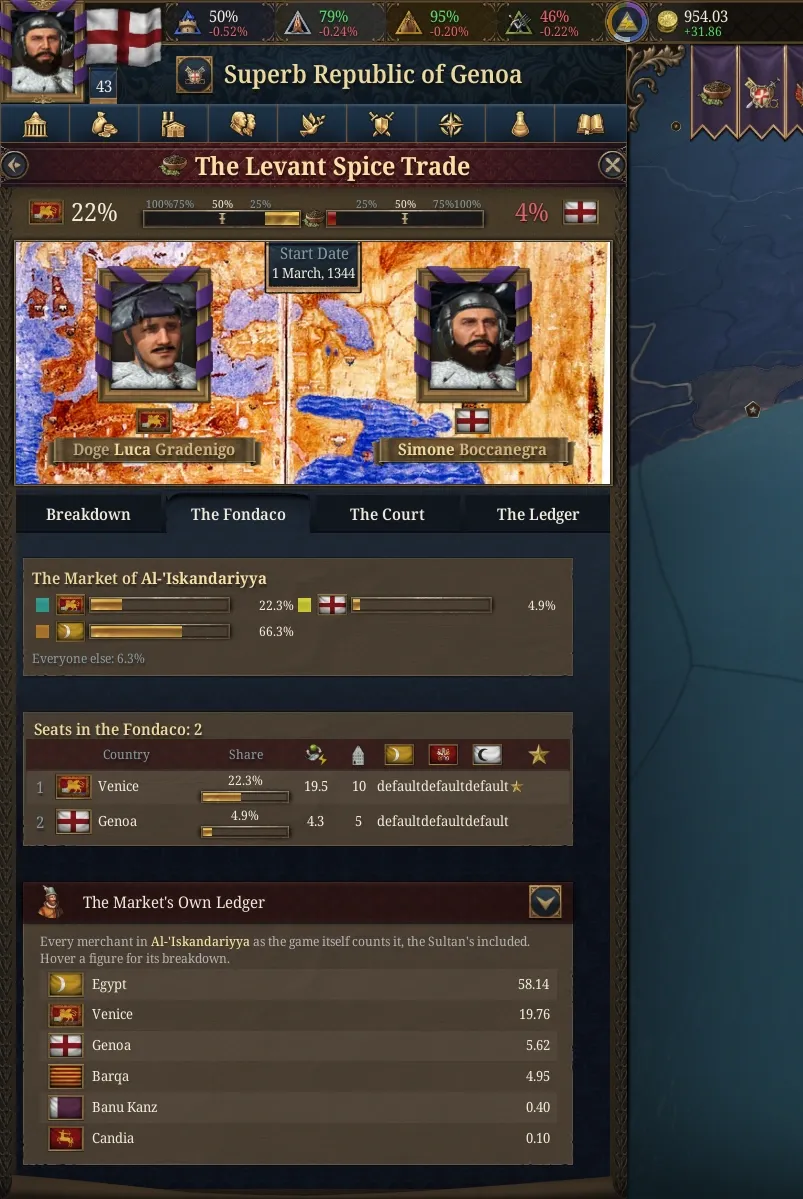
The Fondaco: Venice and Genoa's share of the market of Al-Iskandariyya against the Sultan's own merchants, and the seats each republic holds.
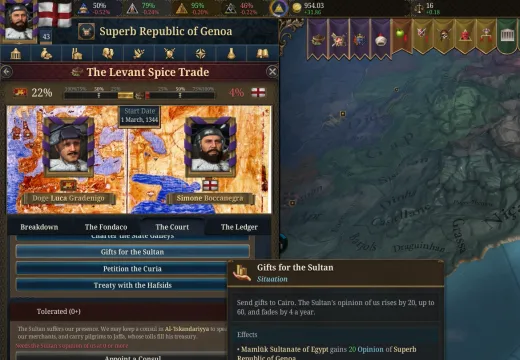
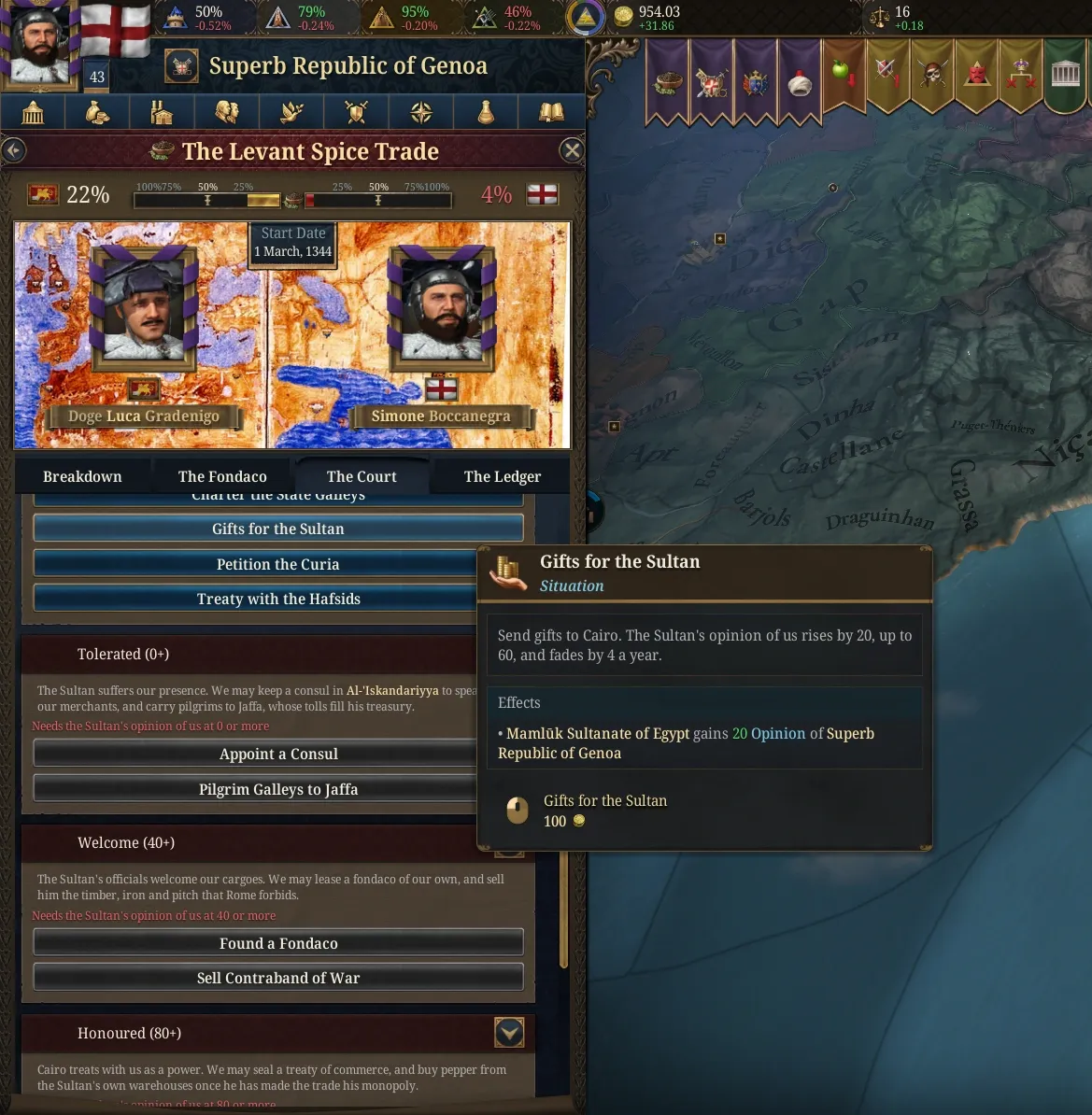
The Court: the Sultan's opinion of a republic decides what it may do, from appointing a consul to founding a fondaco of its own.

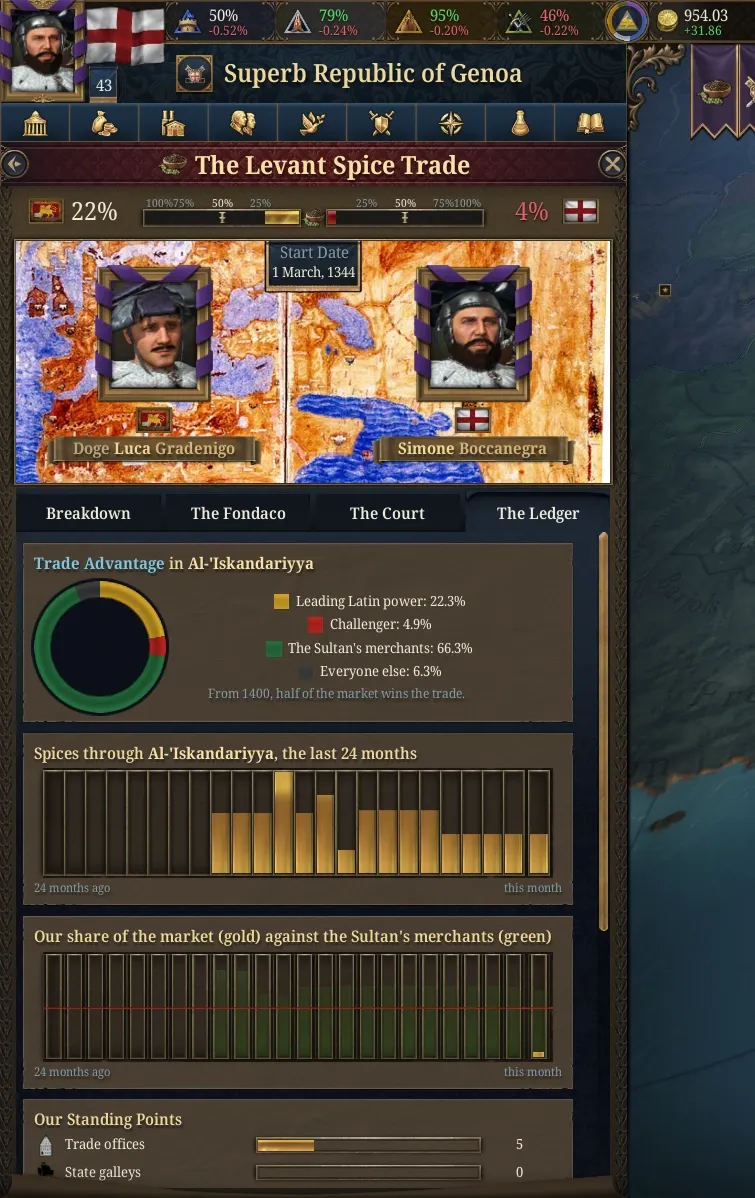
The Ledger: who holds the trade advantage, the spices passing through Al-Iskandariyya over two years, and our share against the Sultan's merchants.
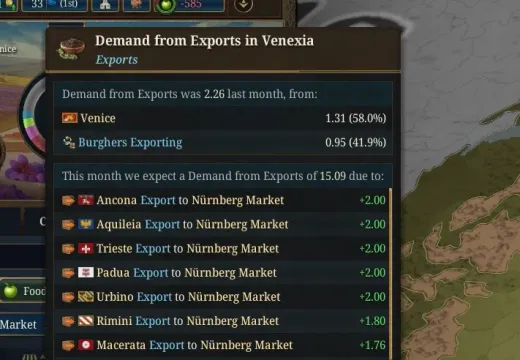
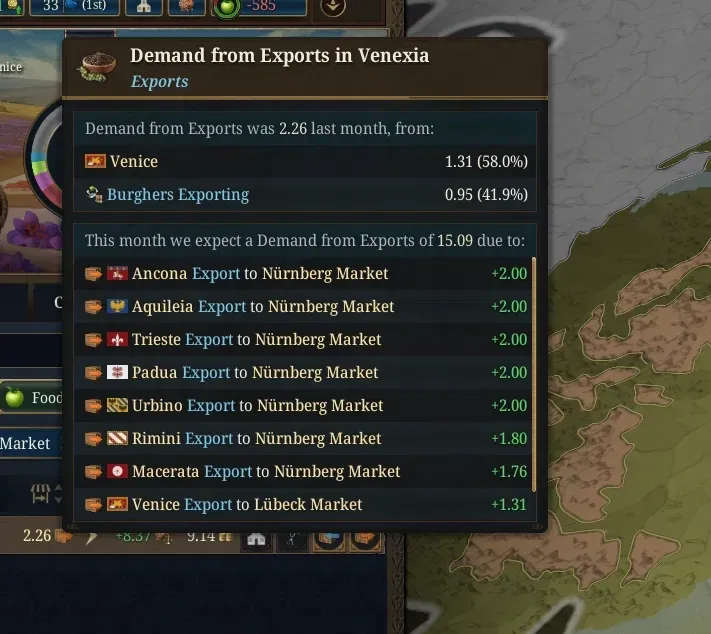
Demand from exports in Venexia: Venice and the towns of the Adriatic sell on to the markets of Nürnberg and Lübeck.

Venice's income in Exchequer: with the spice flowing, trade brings in 43 of its 48 gold a month.

The Gravitas Historica seal.


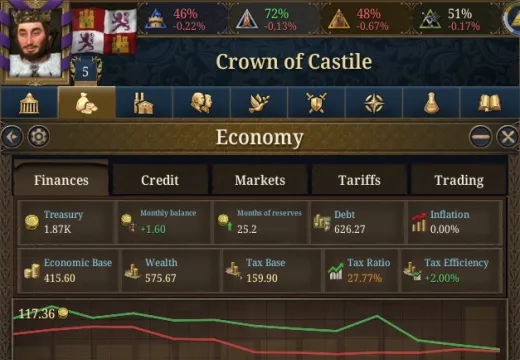
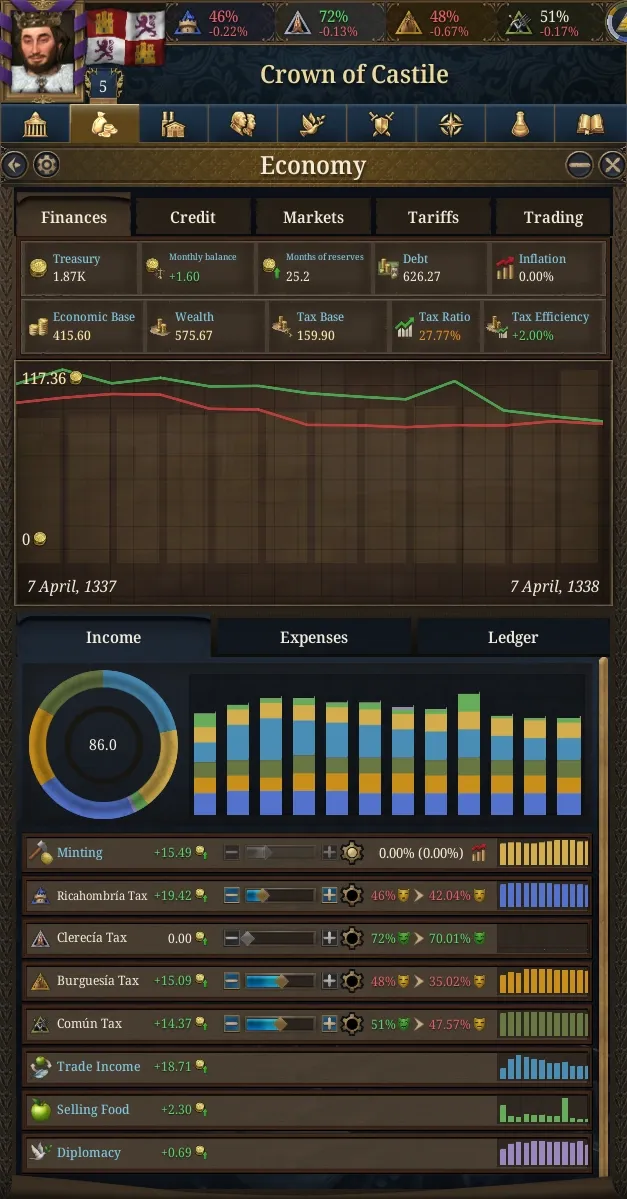
The Finances panel for Castile, Income tab: the state's figures at the top, income and expenses over the past year, and every income line with its slider and 12-month history.
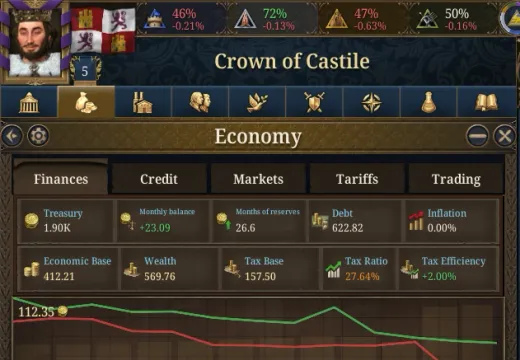
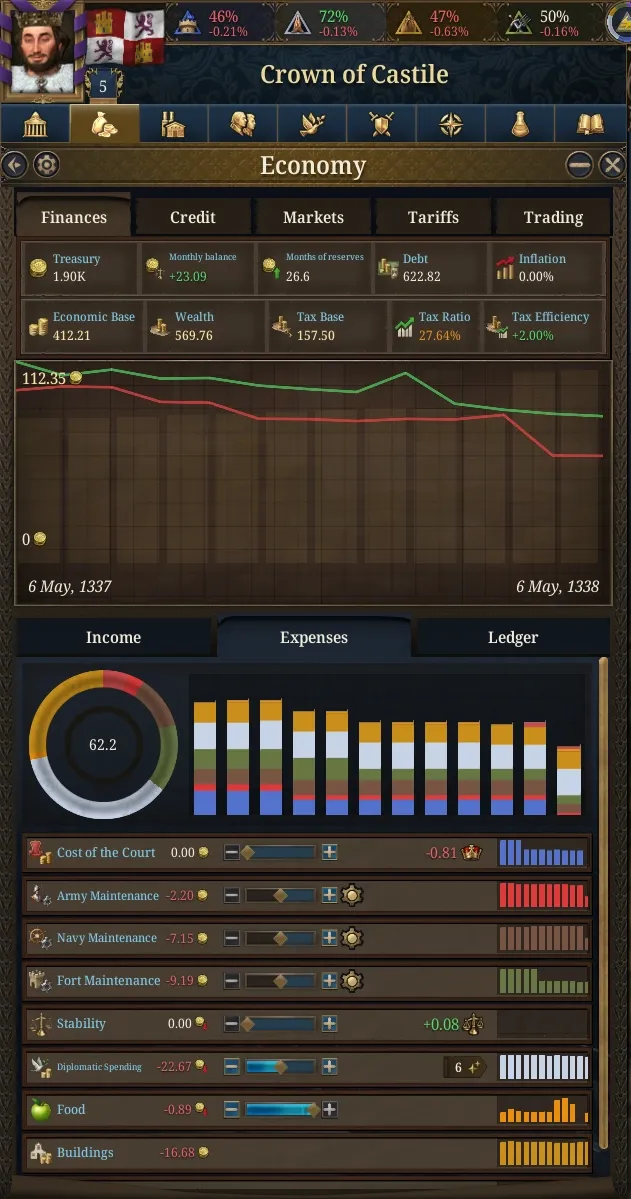
Expenses: court, army, navy, forts, diplomacy, food and buildings, each in the colour it has in the charts.
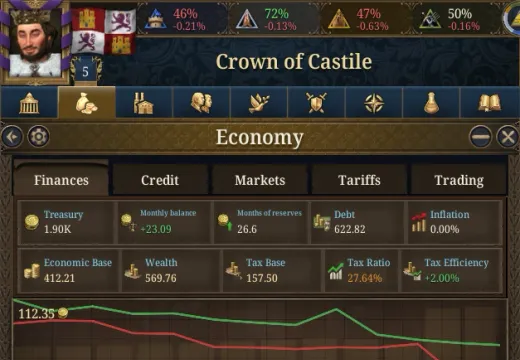
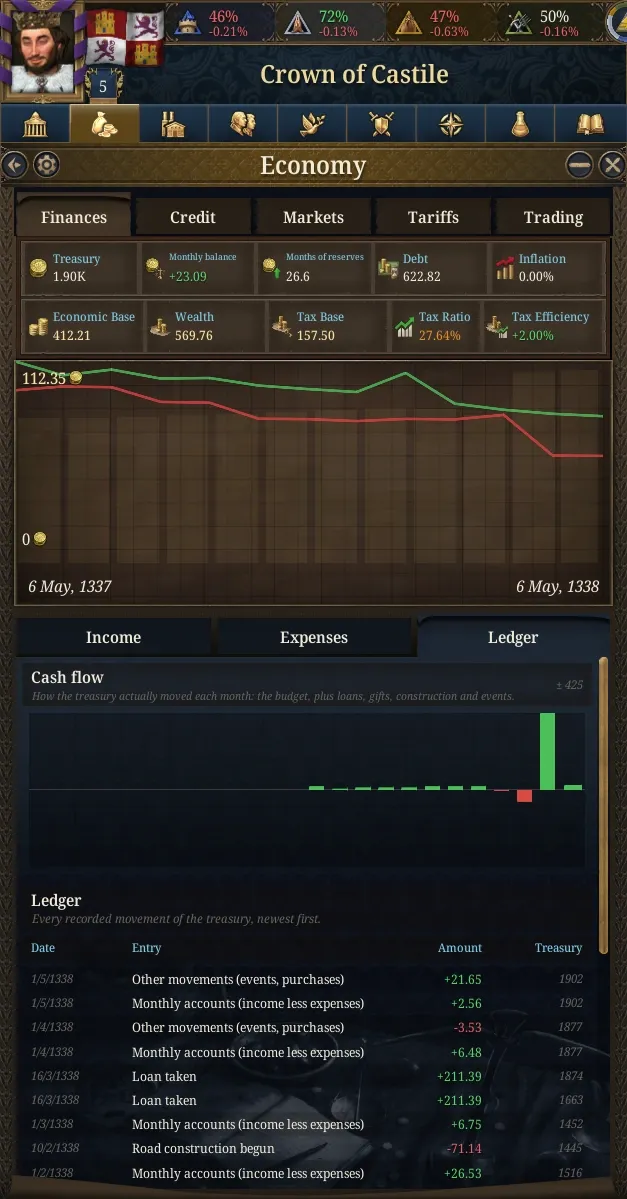
The Ledger: a cash-flow chart and every movement of the treasury, from the monthly accounts to loans and road building.
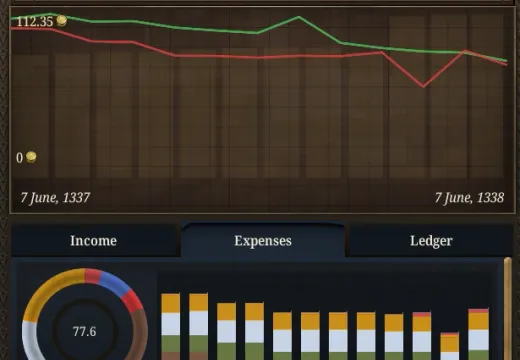
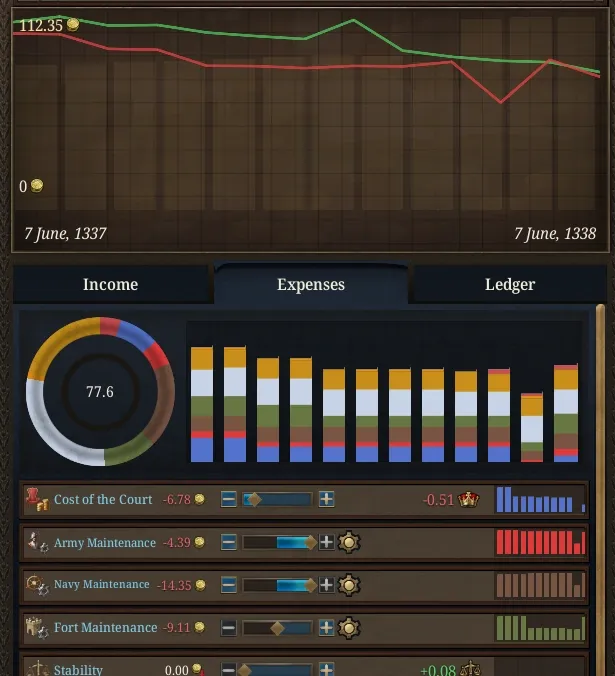
This month's expenses as a pie, the past year as stacked columns, and a row for every expense with its own history.

Exchequer, a Gravitas Historica mod.